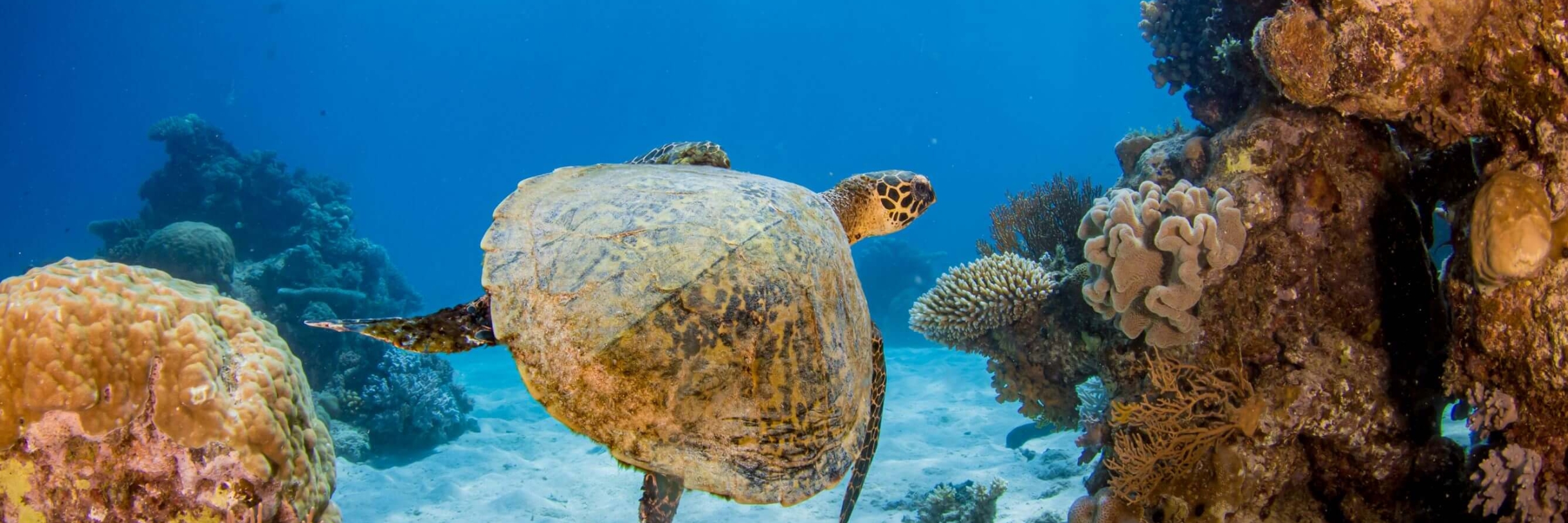
Accessible Reef Tours at a Glance
The large pontoon tours from Cairns are the most accessible way to reach the Great Barrier Reef, with ramp or lift boarding, accessible bathrooms, flat decks and underwater viewing. This guide explains what each type of tour offers and what to ask before you book.
“The Great Barrier Reef belongs to everyone — and with the right tour, it is within reach for more people than you might imagine.”
The Reef Is For Everyone — Accessible Tour Options from Cairns
In short: The large pontoon tours from Cairns are the most accessible way to reach the Great Barrier Reef, with lift or ramp boarding, accessible bathrooms, flat decks and underwater viewing that needs no swimming. Equipment such as hoists and aquatic wheelchairs varies by operator and by day, so confirm your exact requirements by phone before you book.
This page answers: which reef tours from Cairns are genuinely wheelchair accessible, how to see the reef without entering the water, whether hoists and aquatic wheelchairs are available, whether people with limited mobility can snorkel, what to declare before you travel, and how to arrange accessible transfers to the wharf.
The Great Barrier Reef is one of the world’s great natural wonders, and experiencing it should not be limited by physical ability, mobility, or confidence in the water. Cairns’ reef tour operators have invested significantly in making reef experiences genuinely accessible — with purpose-built facilities, trained staff, and a genuine commitment to inclusion that goes far beyond simple compliance.
Several major reef tour vessels operating from Cairns are equipped with wheelchair-accessible gangways, onboard lift systems, and accessible bathroom facilities. Reef pontoons — fixed platforms anchored above the reef — provide a stable and level environment for passengers with mobility limitations to experience the reef without the physical demands of a rolling vessel. Glass-bottom boat rides, underwater observatories and semi-submersible tours are all available at the reef pontoon, providing vivid reef experiences that require no swimming or snorkelling ability at all.
In-Water Options for Guests with Disabilities
For guests who want to get in the water, flotation vests, noodles and personal floatation devices are provided by all operators at no extra charge. Sea-Walker helmet diving — a form of underwater walking where guests wear a pressurised helmet and walk along the seabed — is available at some reef pontoons and is accessible to people who cannot swim. Crew members are trained to assist guests with disabilities into and out of the water, and operators are experienced in making accommodations for a wide range of needs.
Introductory scuba diving is also available to guests with certain disabilities with medical clearance, and qualified dive instructors provide one-on-one in-water support throughout the experience. Guests with hearing impairments, visual impairments, or autism spectrum conditions can discuss their specific needs with operators in advance — most are experienced in providing tailored support.
Planning Your Accessible Reef Trip
The most important step is to contact your chosen reef tour operator directly before booking and discuss your specific requirements. Most operators are experienced at matching guests with appropriate onboard facilities and activities. Booking through an accessible-focused travel agent familiar with Cairns can also be helpful. With the right preparation, the Great Barrier Reef is a genuinely life-changing experience for visitors of all abilities.
Common Questions About Accessible Reef Tours
Which Cairns reef tours are wheelchair accessible?
The pontoon-based tours are the most reliable choice. They generally offer step-free or lift access onto the vessel, accessible bathrooms on board and on the pontoon, flat decks, and viewing options that need no swimming at all. Smaller dive and snorkel vessels are usually less accessible because of ladders and swim-platform entry. Confirm the specific vessel and date with the operator.
Can you see the reef without getting in the water?
Yes, and it is a genuinely good experience rather than a consolation. Pontoon tours run semi-submersibles and glass-bottomed boats, and some have an underwater observatory, so you can see coral and fish from a seat. Marine biologist presentations and touch tanks are usually included.
Are there hoists or aquatic wheelchairs on Cairns reef vessels?
Some operators carry them, but not all, and not always on every departure. This is the single most important thing to confirm by phone before booking. Ask what equipment will physically be on the vessel on your date and who is trained to operate it.
Can people with limited mobility snorkel on the reef?
Often, yes. Flotation vests, pool noodles, guided snorkel tours with a lifeguard and calm pontoon lagoons make snorkelling possible for many people who would not attempt it from a beach. Crews are used to assisting, and telling them before you board rather than at the ladder makes an enormous difference.
Do you need to declare a medical condition before a reef trip?
Operators ask about medical conditions for diving, and often for snorkelling too, because the reef is a long way from a hospital. Being straightforward about a condition almost never means being turned away; it means the crew can plan for it. Withholding it is what creates a problem on the day.
How long is the boat trip, and does that matter for accessibility?
Outer reef sites are roughly 90 minutes to two hours each way, which is a long time seated. Ask about seating options, bathroom access during the crossing and whether you can remain in your own chair. Inner reef and island trips such as Green Island are much shorter at around 45 minutes.
Is there accessible parking and transfer at the departure point?
Reef boats leave from the Reef Fleet Terminal and Marlin Marina in the city centre, which has accessible parking and step-free access to the wharves. Most operators offer hotel transfers, but accessible vehicles are limited, so book the transfer at the same time as the tour rather than afterwards.
Choosing the Right Accessible Reef Day
Accessibility on the reef is not one thing, and the honest answer depends on what you need. This is how we would think it through.
| If you need | Look first at | Why |
| Step-free access and a stable platform all day | An outer-reef pontoon trip — see Cairns reef tours | A pontoon is a fixed structure with level decks, shade, seating and toilets, so the day does not depend on a moving boat. |
| A short crossing rather than a long one | Green Island or Fitzroy Island | Both are well under an hour from the city, which matters far more than most brochures admit. |
| To see coral without entering the water | Semi-submersible and glass-bottom boat options, covered on Plan Your Reef Tour | You see living coral and fish from a seat, dry and shaded, with no swimming involved. |
| Support to get into the water | Operators with lift, hoist or beach-entry options — ask before booking | Equipment varies by vessel and is limited in number, so it must be arranged in advance rather than on the day. |
Who should consider a different day
If long boat crossings are difficult, if you are prone to motion sickness, or if a full day away from familiar facilities would be draining, the outer reef may not be the right choice — and that is a completely reasonable conclusion. Accessible Cairns covers gentler alternatives, including the Esplanade Lagoon, the Botanic Gardens and shorter half-day options. Deciding not to book the wrong trip is just as good an outcome as booking the right one.
A Moment Worth Slowing Down For
People often describe the same thing afterwards, and it is rarely the coral. It is the moment the engines cut and the water goes quiet, and it becomes obvious that the reef is not something you have to climb down into to be part of. Sitting on a pontoon deck watching fish move under clear water counts. It always did.
Which Reef Islands the Land Manager Describes as Accessible
Operator equipment varies by vessel and by departure, and we cannot verify it for you. Island facilities are different: Queensland Parks and Wildlife Service manages the reef island national parks and publishes their accessibility directly, so this part of the decision can be made on evidence rather than on hope. What QPWS states, checked on 3 August 2026, is set out below.
| Island | What Queensland Parks and Wildlife Service publishes |
|---|---|
| Green Island | Boardwalks and tracks throughout the national park and within the resort area are accessible to wheelchairs and strollers. QPWS separately names the Green Island jetty as a wheelchair-accessible park experience. |
| Fitzroy Island | No wheelchair-accessible facilities or tracks in the national park. The privately operated resort area is not covered by that statement. |
| Frankland Group | No wheelchair-accessible facilities or tracks. Landing is by beach transfer from a small vessel. |
| Dunk and Bedarra (Family Islands) | No wheelchair-accessible facilities. |
| Hinchinbrook Island | No wheelchair-accessible facilities. |
| Lizard Island | No wheelchair-accessible facilities in the national park. |
| Orpheus Island | No wheelchair-accessible facilities. |
| Haggerstone Island | Not a QPWS park and not published by any land manager. Ask the island’s operator. |
The practical reading of that table is short. Green Island is the only reef island near Cairns that the land manager describes as accessible to wheelchairs and strollers, and it is also the only one whose jetty QPWS names as wheelchair-accessible — which matters, because the jetty and the gangway are usually where an island day succeeds or fails. Everywhere else, the answer from the land manager is that no accessible facilities are provided.
Three caveats belong with it. QPWS is describing national park land, so privately operated resort areas are outside these statements. The vessel, the gangway and any beach landing belong to your operator, so boarding assistance is still a question to ask when you book. And QPWS notes that not all park facilities meet the Australian Standard, and that many are suitable for visitors in wheelchairs with someone to assist them. One further point that is rarely published anywhere: certified guide, hearing and assistance dogs are welcome in all public areas of Queensland’s parks and forests. Sources: Queensland Parks and Wildlife Service — Park accessibility and the visiting-safely page for each park. Verified with Queensland Parks and Wildlife Service on 3 August 2026.
Where To Go Next
- Accessible Cairns — Accessible transport, beaches, attractions and facilities across the city.
- Plan Your Reef Tour — Choose the vessel, the crossing and the reef site that suit you.
- Cairns Reef Tours — Compare pontoon, sailing and small-boat reef days.
- Green Island — A short crossing to a coral cay with level paths and facilities.
- Reef Safety — Stingers, sun and medical declarations, explained simply.
- Public Toilets in Cairns — Including accessible facilities near the departure points.
- School Groups and Educational Tours — Planning for a school group with mixed abilities? Start here.
Sources and Further Reading
We check the practical and safety information on this page against the organisations responsible for it, and we tell you when we last looked.
- Cairns Airport — Access for All — wheelchair assistance, accessible parking, the hidden disabilities programme and how to request help before you fly.
- Translink — Accessibility — accessible buses, boarding assistance and travel training for Queensland public transport.
- Reef Authority — Planning your visit — how reef access is permitted and managed, including pontoon facilities.
Every source above was checked and found current on 1 August 2026. Accessibility features on individual tours, vessels and venues change with equipment, staffing and refits, so always confirm your specific requirements directly with the operator before you book. We do not publish an accessibility claim for any operator that we have not been able to check.
A Hot Getaways destination. Where Care is Our Compass.
Travel Kindly
At Hot Getaways, care is our compass — and a little kindness makes every journey better. When you visit Cairns, we gently ask you to:
- Protect the reef — wear reef-safe sunscreen and never touch or stand on the coral.
- Respect the wildlife — admire the birds, turtles and rainforest creatures from a distance, and take your rubbish home with you.
- Support local — choosing local operators, cafés and guides helps this beautiful place thrive.
- Honour Country — we travel on the traditional lands and sea Country of Australia’s First Peoples, with gratitude and respect to the Traditional Custodians past and present.
- Be kind to each other — a smile, a little patience and a helping hand make the day lovelier for everyone.
Small acts of care add up to something wonderful. Thank you for travelling kindly.