Lodges at a Glance
North Queensland has wilderness lodges and rainforest retreats where you stay surrounded by nature, from the Daintree to the Tablelands. This guide lists lodges worth the trip.
“In North Queensland, a lodge isn’t just somewhere to sleep — it’s where the rainforest holds you for the night.”
Wilderness Lodges and Rainforest Retreats Across Tropical North Queensland
There is a category of accommodation in North Queensland that sits outside the usual spectrum of hotels and resorts — the lodge. Whether perched on the edge of rainforest, nestled beside a mountain stream, or positioned on a working cattle property on the tropical savanna, lodges in this region offer something that larger properties rarely can: genuine immersion in the landscape.
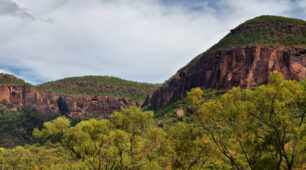
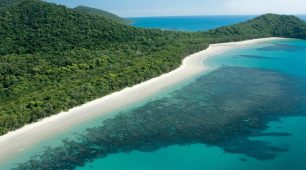
North Queensland’s lodge accommodation spans an extraordinary range of environments. On the Atherton Tablelands, small eco-lodges sit among fig trees and tree ferns, where the calls of birds replace alarm clocks and the morning begins with mist lifting off the creek. Near Cape Tribulation, wilderness lodges position guests within the world’s oldest tropical rainforest — the Daintree — where the biological richness of the Wet Tropics surrounds you at every turn.
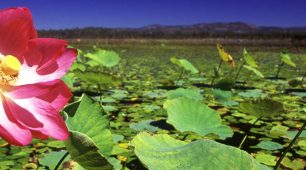
Further north, near Cooktown and beyond, remote station lodges offer access to country that few Australians ever see. The Gulf Savanna, the Cape York Peninsula, and the tropical rivers that drain towards the Coral Sea are all accessible from properties that blend comfort with genuine adventure.
In and around Cairns itself, boutique lodge-style properties along the northern beaches and in the hills above the city combine proximity to town with a sense of retreat. Guests wake to birdsong, explore private gardens thick with native plants, and return each evening to something that feels genuinely like a home in the tropics.



A Hot Getaways destination. Where Care is Our Compass.
Who a Lodge Suits — and What It Asks in Return
A lodge is a decision about where you want to wake up, and it is worth making with the trade-offs in plain view.
It suits travellers who want the landscape itself to be the accommodation, birdwatchers and photographers who need to be in place at first light, couples looking for quiet, and anyone building a trip around the Daintree, the Tablelands or the savanna rather than around the reef.
Something else may suit better if your itinerary is reef-heavy, because most reef vessels leave the Cairns Reef Fleet Terminal early and a lodge an hour or more inland turns that into a long morning. Lodges also often have limited dining choice, patchy mobile coverage and no nearby shop, and some run on tank water and generators. Those are part of the appeal for many visitors and a genuine obstacle for others.
The next question is transport, and here the answer is unambiguous. TransLink defines its Cairns network as the Cairns Regional Council area, stretching “from Palm Cove in the north, south to Gordonvale, west to Redlynch, and incorporates Cairns City and surrounding suburbs” (TransLink, Our service area, checked 3 August 2026). Almost every lodge in this region sits outside that line, so a hire car, a transfer arranged with the lodge or a guided tour is not optional. Road conditions in the wet season are worth checking before you set out, and Queensland publishes them live at QLDTraffic.
Accessibility at a Wilderness Lodge
Lodges vary more than any other category, and no authority publishes their accessibility, so we do not estimate it. The terrain is the thing to ask about: whether the route between the car park, the room and the dining area is sealed, boarded or a garden path; whether there are steps or a ramp; whether rooms are raised on stumps, as many rainforest buildings are; doorway widths; shower type; and how far the nearest medical help is. Lodges are usually small enough that a direct call gets a precise and honest answer.
Because most lodges sit outside the public transport network, getting there is part of the access question. TransLink does not publish which Cairns services operate accessible vehicles and recommends contacting its delivery partner before travelling, and it answers calls 24 hours a day on 13 12 30 (TransLink, Accessible services, checked 3 August 2026). Our accessible Cairns guide gathers what else is verified across the region.
Choosing a Lodge in Tropical North Queensland
The questions worth answering before you book a rainforest or wilderness lodge.
Do you need a car to stay at a lodge?
Almost always. TransLink defines its Cairns network as the Cairns Regional Council area from Palm Cove in the north, south to Gordonvale and west to Redlynch, and most lodges sit outside that area. A hire car, a transfer arranged with the lodge or a guided tour is the practical answer. (TransLink, Our service area, checked 3 August 2026.)
Is a lodge a good base for Great Barrier Reef trips?
Usually not the best one. Most reef vessels depart early from the Reef Fleet Terminal in Cairns, and a lodge an hour or more inland makes for a very early start. Many visitors split their stay, taking the reef days from the coast and the rainforest nights at a lodge.
What facilities do wilderness lodges usually have?
It varies widely. Some are full-service with a restaurant and guided walks, others are simple and self-catering, and mobile coverage, power supply and water supply differ from property to property. Because none of this is published centrally, the property is the reliable source.
When is the best time to stay at a rainforest lodge?
The drier months from about May to October bring clearer walking conditions and easier driving, while the wet season brings the rainforest to life with full waterfalls and far fewer visitors. Wet season road conditions are published live by QLDTraffic and are worth checking before you drive.
Travel Kindly
At Hot Getaways, care is our compass — and a little kindness makes every journey better. When you visit Cairns, we gently ask you to:
- Protect the reef — wear reef-safe sunscreen and never touch or stand on the coral.
- Respect the wildlife — admire the birds, turtles and rainforest creatures from a distance, and take your rubbish home with you.
- Support local — choosing local operators, cafés and guides helps this beautiful place thrive.
- Honour Country — we travel on the traditional lands and sea Country of Australia’s First Peoples, with gratitude and respect to the Traditional Custodians past and present.
- Be kind to each other — a smile, a little patience and a helping hand make the day lovelier for everyone.
Small acts of care add up to something wonderful. Thank you for travelling kindly.