Cairns Seasons at a Glance
Cairns has two seasons, not four. The dry season brings sunny, mild days and low humidity, while the wet season is hot and humid with heavy rain and dramatic storms. This guide explains what each season means for your trip.
“Cairns doesn’t follow the four seasons — it writes its own, and both of them are extraordinary in their own particular way.”
Understanding the Wet and Dry Seasons and What Each Offers Visitors
Tropical North Queensland operates on a two-season calendar that is fundamentally different from the temperate rhythm of southern Australia. The Dry Season and the Wet Season each have their own character, their own gifts, and their own very particular atmosphere — and both are genuinely wonderful, in different ways, to visit.
The Dry Season runs from May to October. This is the period when the skies are consistently clear, humidity drops, and the region comes into its most visitor-friendly form. Days are warm to hot, evenings are pleasant, and the reef conditions are generally excellent — calm seas, clear water, and the full splendour of the Outer Reef at its most accessible. This is peak season for Cairns, when accommodation is fullest and the city’s energy is at its most vibrant.
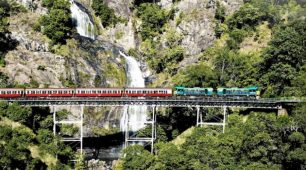
The Wet Season runs from November to April, with the heaviest rainfall typically between December and March. The transformation that the Wet brings to this landscape is extraordinary — waterfalls that were threads in the Dry become torrents, the rainforest turns a deeper, more saturated green, and the rivers fill and run. The Atherton Tablelands in the Wet is one of the most dramatically beautiful landscapes in Australia. Visitor numbers are lower, some tour operators adjust their schedules, and a few roads and tracks may be temporarily affected by flooding — but for those who embrace it, the Wet Season has a wild, exhilarating quality that the Dry never quite matches.
Understanding which season you are visiting in allows you to plan experiences that make the most of what that season offers, rather than working against it.





A Hot Getaways destination. Where Care is Our Compass.
Travel Kindly
At Hot Getaways, care is our compass — and a little kindness makes every journey better. When you visit Cairns, we gently ask you to:
- Protect the reef — wear reef-safe sunscreen and never touch or stand on the coral.
- Respect the wildlife — admire the birds, turtles and rainforest creatures from a distance, and take your rubbish home with you.
- Support local — choosing local operators, cafés and guides helps this beautiful place thrive.
- Honour Country — we travel on the traditional lands and sea Country of Australia’s First Peoples, with gratitude and respect to the Traditional Custodians past and present.
- Be kind to each other — a smile, a little patience and a helping hand make the day lovelier for everyone.
Small acts of care add up to something wonderful. Thank you for travelling kindly.
How the Seasons Change a Reef Booking
The season you travel in changes the reef day more than it changes the city. In the drier months the south-easterly trade winds are the main influence on sea state; in the warmer months the water is warmer and marine stingers are a consideration, and reef operators supply full-length lycra suits. Queensland Parks and Wildlife Service states that dangerous stinging jellyfish may be present in coastal waters at any time of year and occur more frequently in the warmer months, so the suit is worth wearing whenever it is offered. Whichever month you choose, the sea state on the day is the thing that decides comfort, and the Bureau of Meteorology publishes the Cairns Coastal Waters Forecast, Cape Tribulation to Cardwell for exactly that question. Verified with Queensland Parks and Wildlife Service and the Bureau of Meteorology on 3 August 2026.
Questions People Ask About the Cairns Seasons
Are marine stingers only a problem in summer?
No. Queensland Parks and Wildlife Service states that dangerous stinging jellyfish may be present in coastal waters at any time of year, and that they occur more frequently in the warmer months. A full-body lycra suit or equivalent gives good protection against both stings and sunburn, and reef operators supply one, so it is worth wearing whenever it is offered rather than only in the months you expect. Verified with Queensland Parks and Wildlife Service on 3 August 2026.
Which season is better for a reef trip?
The drier months are generally calmer and clearer, but the sea state on your particular day matters more than the month. The Bureau of Meteorology publishes the Cairns Coastal Waters Forecast for Cape Tribulation to Cardwell, which gives wind, seas and swell and forecasts conditions inside and outside the reef separately. Verified with the Bureau of Meteorology on 3 August 2026.
The Two Seasons, Side by Side
Far North Queensland does not really have four seasons. It has two, and understanding the difference between them is the single most useful piece of planning you can do.
| The Wet (November–April) | The Dry (May–October) | |
|---|---|---|
| Rainfall | Feb is wettest: 437.5 mm | Aug is driest: 26.5 mm |
| Days with rain of 1 mm+ | About 16 in February | About 5 in August |
| Mean daily sunshine | 6.2 hours in February | 8.8 hours in October |
| Mean maximum | 31.5 °C in January | 25.9 °C in July |
| 3 pm humidity | 69% in February | 55% in September |
| Waterfalls | At their most powerful | Gentler, easier to swim near |
| Crowds and prices | Lowest of the year | Highest of the year |
The line most people miss is the sunshine row. Even at its wettest, Cairns is not a sunless place. The rain is heavier and more frequent, but it is also concentrated — often overnight, often in short afternoon bursts — rather than spread thinly across the whole day.
The Season Dates That Actually Matter
Four different authorities publish four different season boundaries, and they do not all line up. This is worth two minutes of your time because the gaps are where visitors get caught.
- Tropical cyclone season: 1 November to 30 April. Defined by the Bureau of Meteorology, which notes cyclones outside these months are rare.
- Wet season: November to April. Used by Transport and Main Roads on its flooding and wet weather page, where it warns that roads can be cut off or washed away.
- Marine stinger season: typically November to May. Described by Surf Life Saving Queensland, which also notes stingers may be present in tropical Queensland year-round.
- Patrol and facility seasons vary by beach and are set locally. Check with the responsible council or surf club rather than assuming.
The practical consequence: May feels like the dry season and is the dry season for rain, roads and cyclones — but it is still stinger season. That one month catches out more visitors than any other part of the calendar.
Choosing Between Them
Choose the wet season if you want the rainforest and waterfalls at their most spectacular, you would rather pay less and share less, and you can be flexible about the order of your days.
Choose the dry season if your trip is short, you are planning unsealed-road drives or long walks, humidity is hard for you, or open-beach swimming without a stinger suit matters to you.
Neither is the “right” answer. They are two different holidays in the same place, and the region is worth seeing in both.
The Question People Ask Next
“How do I check conditions once I have chosen?” — Use the responsible authority rather than a general forecast app. The Bureau of Meteorology Cairns forecast and its warnings page cover weather; QLDTraffic covers roads; Queensland Parks and Wildlife park alerts cover national park tracks and closures; and the Reef Authority reef health updates cover reef conditions.
Averages on this page are from the Bureau of Meteorology monthly climate statistics for Cairns Aero (station 031011), checked 3 August 2026. Rainfall and temperature figures are drawn from 83 years of record; sunshine figures from a shorter 43-year record.
Where To Go Next
- Cairns Weather — month-by-month averages and what they mean in practice.
- Plan Your Reef Tour — choosing between the inner reef, the outer reef and an island day.
- What to Pack — what actually earns its place in the bag in each season.
- Plan Your Trip to Cairns — building the days around the weather rather than against it.