The weather shapes every Cairns adventure. Warm tropical days, refreshing trade winds, dramatic summer storms and brilliant winter sunshine all create different ways to experience this remarkable region. Whether you’re planning to snorkel the Great Barrier Reef, explore ancient rainforests, relax on a tropical island or discover the Atherton Tablelands, understanding Cairns’ tropical climate will help you choose the perfect time to visit. Every season has its own rewards, and every month offers something special.
In short: Cairns has two seasons rather than four. The dry season, roughly May to October, is warm, sunny and low in humidity, with the calmest seas and the most reliable reef conditions. The wet season, roughly November to April, is hot and humid with heavy afternoon downpours, a greener rainforest, fuller waterfalls, warmer water, and an overlap with both marine stinger season and the official cyclone season.
This page answers: what the weather is like month by month, what the long-term averages actually are, when the wet and dry seasons run, sea temperatures, cyclone season dates, what to pack, and which months suit which kind of trip.
Understanding Cairns’ Tropical Climate
Cairns has a classic tropical monsoon climate, warm year-round, with two distinct seasons that shape the character of the city and the region in dramatically different ways. The dry season (May through October) is the season most visitors know and seek: reliably warm days, low humidity, clear skies and calm seas. The wet season (November through April) is the other Cairns, hot, intensely humid, dramatic with afternoon thunderstorms and the occasional cyclone, but lush, green and extraordinary in its own way.
Average maximum temperatures in Cairns range from around 25°C in July and August (the coolest months, which feel warm to most Australian and international visitors) to about 31.5°C in January and December (the heart of the wet season). Humidity peaks during the wet season, when afternoon temperatures combined with high moisture in the air can feel very intense, particularly between 11am and 3pm. The dry season humidity is significantly lower and the heat much more comfortable.
Cairns Weather at a Glance
- Tropical climate all year
- Average temperatures: 21°C overnight to 29°C daytime across the year
- Dry Season: May to October
- Wet Season: November to April
- Warm ocean temperatures year-round
- Great Barrier Reef tours operate throughout the year
- Every season offers unique experiences
Cairns Weather Month by Month
January
Average maximum: 31.5°C | Average minimum: 23.8°C | Average rainfall: 404.8 mm across about 15.8 rain days | Average daily sunshine: 6.8 hours
The wettest stretch of the year is under way and the landscape shows it. Expect heavy afternoon downpours rather than all-day drizzle, waterfalls in the Atherton Tablelands at full force, and the Daintree Rainforest at its most alive. Humidity is the real story: it is genuinely draining between 11am and 3pm. Reef trips still run most days, but build flexibility into your dates.
February
Average maximum: 31.3°C | Average minimum: 23.8°C | Average rainfall: 437.5 mm across about 16.1 rain days | Average daily sunshine: 6.2 hours
Statistically the wettest month of the year and the cloudiest, with the least sunshine. It is also the quietest month for visitors, which means lower prices and uncrowded reef boats on the days the weather cooperates. Cyclone risk is at its seasonal peak, so read our guide to preparing for a cyclone in Cairns and choose bookings with free cancellation.
March
Average maximum: 30.7°C | Average minimum: 23.2°C | Average rainfall: 422.1 mm across about 16 rain days | Average daily sunshine: 6.5 hours
Still firmly wet season, with rainfall close to February levels, though the second half of the month often begins to ease. Rainforest and waterfall trips are at their most spectacular now. Sea temperatures are at their warmest, marine stingers are in season, and a full-length stinger suit is standard on reef trips.
April
Average maximum: 29.4°C | Average minimum: 21.8°C | Average rainfall: 201.8 mm across about 14.5 rain days | Average daily sunshine: 6.8 hours
The turning point. Rainfall halves compared with March, humidity starts to drop and reef visibility improves noticeably. Many regular visitors consider April the best value month of the year: wet-season prices, dry-season conditions for much of it. The Great Barrier Reef is in good shape and the crowds have not arrived.
May
Average maximum: 27.7°C | Average minimum: 20°C | Average rainfall: 92 mm across about 10.5 rain days | Average daily sunshine: 6.8 hours
The dry season proper begins. Rainfall drops sharply, mornings turn comfortable and the sea settles. This is one of the most pleasant months in Cairns and the start of the stinger season winding down at the beaches, though stingers can be present at any time of year. Trade winds pick up through the month, which can make outer reef days choppier.
June
Average maximum: 26.1°C | Average minimum: 18°C | Average rainfall: 45.5 mm across about 7 rain days | Average daily sunshine: 7.2 hours
Cool by tropical standards and warm by anyone else. Nights drop to around 18°C, which locals call cold. Minke whale season begins on the northern reef, humpbacks start moving through, and Kuranda and Tablelands walking conditions are close to perfect. Winds are at their strongest, so check the marine forecast if you are prone to seasickness.
July
Average maximum: 25.9°C | Average minimum: 17.2°C | Average rainfall: 33.2 mm across about 5.7 rain days | Average daily sunshine: 7.4 hours
The coolest month and the busiest, as southern Australians arrive to escape their winter. Reef weather is reliably good and visibility is strong. Book accommodation and popular tours well ahead: July is the month things genuinely sell out. Pack a light layer for early boat departures and evening dinners.
August
Average maximum: 26.7°C | Average minimum: 17.4°C | Average rainfall: 26.5 mm across about 4.9 rain days | Average daily sunshine: 8.1 hours
The driest month of the year and, for many visitors, the best all-round month. Low humidity, mild days, minimal rain and long stretches of sunshine. Whale sightings on the outer reef are common. Fitzroy Island and Green Island are lovely now, and rainforest walks are comfortable rather than punishing.
September
Average maximum: 28.2°C | Average minimum: 18.8°C | Average rainfall: 34.1 mm across about 4.9 rain days | Average daily sunshine: 8.7 hours
Warming up with the year’s lowest humidity and the second-sunniest conditions. Winds ease from the winter trades, so the sea flattens out and outer reef days become more comfortable. School holidays fall late in the month in some states, which lifts demand. An excellent month for families.
October
Average maximum: 29.7°C | Average minimum: 20.7°C | Average rainfall: 47.2 mm across about 5.7 rain days | Average daily sunshine: 8.8 hours
The sunniest month of the year and a genuinely underrated one. Warm without being oppressive, still dry, and quieter than the July peak. Coral spawning and the return of warmer water begin later in the month, and stinger suits come back into routine use as the season approaches. Very good value.
November
Average maximum: 30.8°C | Average minimum: 22.4°C | Average rainfall: 87.9 mm across about 7.8 rain days | Average daily sunshine: 8.5 hours
The build-up. Humidity climbs, afternoon storms return and rainfall roughly doubles on October. The official Australian tropical cyclone season starts on 1 November. Landscapes green up quickly and prices soften. Marine stinger season is under way at the beaches, and Port Douglas and the northern beaches move to stinger-net swimming.
December
Average maximum: 31.5°C | Average minimum: 23.4°C | Average rainfall: 193.8 mm across about 10.7 rain days | Average daily sunshine: 7.8 hours
Hot, humid and increasingly wet, with rainfall more than double November. Christmas and New Year are busy and priced accordingly, then it quietens. The ocean is bath-warm, the rainforest is spectacular, and afternoon storms are part of the daily rhythm rather than an interruption. Plan indoor or flexible options for the middle of the day.
Cairns Climate Averages at a Glance
| Month | Average max | Average min | Average rainfall | Rain days |
|---|---|---|---|---|
| Jan | 31.5°C | 23.8°C | 404.8 mm | 15.8 |
| Feb | 31.3°C | 23.8°C | 437.5 mm | 16.1 |
| Mar | 30.7°C | 23.2°C | 422.1 mm | 16 |
| Apr | 29.4°C | 21.8°C | 201.8 mm | 14.5 |
| May | 27.7°C | 20°C | 92 mm | 10.5 |
| Jun | 26.1°C | 18°C | 45.5 mm | 7 |
| Jul | 25.9°C | 17.2°C | 33.2 mm | 5.7 |
| Aug | 26.7°C | 17.4°C | 26.5 mm | 4.9 |
| Sep | 28.2°C | 18.8°C | 34.1 mm | 4.9 |
| Oct | 29.7°C | 20.7°C | 47.2 mm | 5.7 |
| Nov | 30.8°C | 22.4°C | 87.9 mm | 7.8 |
| Dec | 31.5°C | 23.4°C | 193.8 mm | 10.7 |
| Year | 29.1°C | 20.9°C | 2025.5 mm | 119.6 |
Temperature and rainfall figures on this page are based on Bureau of Meteorology long-term averages for Cairns Aero, station 031011. Last verified 31 July 2026.
What to Pack
All year. Light, breathable clothing, a broad-brimmed hat, sunglasses, reef-safe sunscreen, insect repellent and comfortable walking shoes. Cairns sits in the tropics and the sun is strong even on cloudy days.
Dry season (May to October). Add one warm layer. Nights average 17 to 21°C and early boat departures are cool on the water. A light rain jacket is still sensible in May.
Wet season (November to April). A light rain jacket rather than an umbrella, quick-dry clothing, sandals you do not mind getting wet, and a dry bag or waterproof phone pouch. Expect to change clothes more than you planned.
Reef trips. Swimwear worn under your clothes, a towel, motion-sickness medication taken before you board rather than after, and a long-sleeved rash top. Operators supply stinger suits and snorkelling gear, but bring your own mask if you are particular about fit. See Reef Safety Tips.
Rainforest walks. Closed shoes with grip, insect repellent, and drinking water. Leech socks are overkill for day walks but not for wet-season creek tracks in the Daintree.
Summer holidays. Plan around the heat rather than through it. Something to do indoors between 11am and 3pm makes December to March far more enjoyable, and Plan Your Trip to Cairns has more on sequencing your days.
Common Questions About Cairns Weather
What is the best month to visit Cairns?
There isn’t a single “best” month because Cairns is a year-round destination. May to October offers warm sunny days, low humidity and excellent conditions for sightseeing, while November to April brings lush rainforests, dramatic waterfalls and warm ocean temperatures. The best time depends on the experiences you are looking for. Once your dates are set, Cairns Airport covers arrival and transfers, and Cairns Tours shows which day trips suit which season.
Does it rain every day during the wet season?
No. The wet season (November to April) often brings short, heavy tropical showers, particularly in the afternoon or evening. It’s uncommon for it to rain all day, and there are still plenty of sunny periods to enjoy reef trips, rainforest tours and outdoor activities.
Can you visit the Great Barrier Reef all year round?
Yes. Great Barrier Reef tours operate throughout the year, with each season offering something different. Winter generally brings calmer weather and lower humidity, while summer offers warm water, vibrant coral gardens and excellent marine life encounters. Operators choose reef locations based on daily weather conditions to provide the best possible experience.
When is cyclone season in Cairns?
The official Australian tropical cyclone season runs from 1 November to 30 April, although cyclones are relatively uncommon in any given season. Tourism operators closely monitor weather forecasts, and tours are only cancelled or rescheduled when safety requires it. Visitors should keep an eye on local forecasts during this period. The Bureau of Meteorology publishes tropical cyclone warnings and bulletins continuously, and our guide to preparing for a cyclone in Cairns explains what to do if one is forecast during your stay.
What is the sea temperature in Cairns?
The Coral Sea remains warm throughout the year. Water temperatures generally range from around 23°C in winter to 29°C in summer, making Cairns one of Australia’s best year-round snorkelling and diving destinations.
Is winter cold in Cairns?
Not by most people’s standards. Winter (June to August) typically brings sunny days between 25°C and 27°C, with cooler mornings and evenings around 17°C to 20°C. A light jumper is usually all that’s needed after sunset.
Can I swim all year round?
Yes. You can swim throughout the year in Cairns. During the marine stinger season (generally November to May), it’s safest to swim at beaches protected by stinger nets or wear a protective stinger suit, which is provided on most Great Barrier Reef tours. Swimming at public beaches is safest within patrolled areas.
What should I pack for Cairns?
Pack lightweight clothing, comfortable walking shoes, swimmers, a hat, sunglasses and reef-safe sunscreen. During the wet season, include a light rain jacket, while in the dry season a light jumper is useful for cooler evenings. If you’re heading to the reef, don’t forget a towel, reusable water bottle and an underwater camera if you have one.
The Dry Season (May–October)
This is the peak travel season in Cairns, clear days, little rain, comfortable temperatures, good reef visibility and calm sea conditions. June through August are the most popular months, with July and August seeing the highest visitor numbers. Accommodation prices are at their peak and availability is tight. Reef tours operate daily and conditions are generally excellent. The occasional strong wind in June to August can affect sea conditions, always check tour operator conditions before booking.
The Wet Season (November–April)
The wet season brings intense heat, high humidity, regular afternoon thunderstorms and the possibility of cyclones. Rivers rise, waterfalls become spectacular, and the landscape turns intensely green. Reef tours continue throughout, rain and cloud don’t affect the underwater experience significantly. Accommodation prices are lowest, crowds are thinner, and the city has a different and in many ways more authentic character. Stinger season overlaps with the wet season, so inshore beach swimming requires stinger suits or enclosures.




 Wildlife Parks and Animal Encounters
 Scenic Flights & Helicopter Tours
 Rainforest and Waterfalls
 Adventure and Adrenaline
Can I swim all year round in Cairns?
Yes. During the marine stinger season, generally November to May, it is safest to swim at beaches protected by stinger enclosures or to wear the protective stinger suit provided on most Great Barrier Reef tours. At public beaches, swim within patrolled areas.
Checking the Sea, Not Just the Sky
If you are going out on the water, the land forecast is only half the picture. The forecast most reef visitors look at is the Cairns town forecast, which tells you whether it will rain. It tells you nothing about whether the crossing will be comfortable. The Bureau of Meteorology publishes a separate marine product for exactly this decision: the Cairns Coastal Waters Forecast, Cape Tribulation to Cardwell, which gives wind, seas and swell for the next few days.
The single most useful feature of it is that the Bureau forecasts seas inside and outside the reef separately, because they are often quite different. That distinction is the difference between an island or inner reef trip and a run out to the outer reef, and it is the honest answer to “will I feel it?” more reliably than any operator description can be. Routine forecasts are issued at 9:00 am and 3:00 pm eastern standard time, so the version you read the night before is not the version your skipper is working from.
The Bureau also publishes a caution that is worth carrying with you: wind and wave forecasts are averages, wind gusts can be forty per cent stronger than the forecast, and maximum waves can be twice the forecast height. If a forecast is already at the upper end of what you would find comfortable, treat that as the answer. Conditions on the day are the responsibility of the Bureau of Meteorology and your skipper, so we link to the live forecast rather than repeating numbers that change twice a day. Verified with the Bureau of Meteorology on 3 August 2026.
The Wet Season in Numbers: What the Bureau’s Records Actually Show
Most descriptions of the Cairns wet season are written from memory or from a single unlucky holiday. The Bureau of Meteorology has been recording the weather at Cairns Aero since 1942, and its published averages tell a more useful — and much more encouraging — story than the word “wet” suggests.
| Month | Mean rainfall | Mean days with rain of 1 mm or more | Mean daily sunshine | Mean maximum |
|---|---|---|---|---|
| November | 87.9 mm | 7.8 days | 8.5 hours | 30.8 °C |
| December | 193.8 mm | 10.7 days | 7.8 hours | 31.5 °C |
| January | 404.8 mm | 15.8 days | 6.8 hours | 31.5 °C |
| February | 437.5 mm | 16.1 days | 6.2 hours | 31.3 °C |
| March | 422.1 mm | 16.0 days | 6.5 hours | 30.7 °C |
| April | 201.8 mm | 14.5 days | 6.8 hours | 29.4 °C |
| September, for comparison | 34.1 mm | 4.9 days | 8.7 hours | 28.2 °C |
Read the third and fourth columns together and the season changes shape. February is the wettest month on the record — and it still averages a little over six hours of sunshine a day, with rain falling on roughly sixteen days of the month rather than all of them. A great deal of that rain arrives overnight or in short, heavy afternoon downpours that clear as quickly as they came.
That is the honest picture: the wet season is warmer, greener, louder and far less crowded than the dry, and it rains a great deal more. It is not six months of grey drizzle. If you have been putting off a trip because you pictured a washout, the Bureau’s own numbers are the best argument for reconsidering.
What Changes, and What Stays Wonderful
What changes. Rivers and creeks rise quickly. Some unsealed roads and national park tracks close. Humidity climbs — the Bureau’s 3 pm relative humidity averages 69% in February against 55% in September. Marine stingers are present inshore. Tropical cyclones are possible. Afternoon storms are common, and a day’s plans may need to move by a few hours.
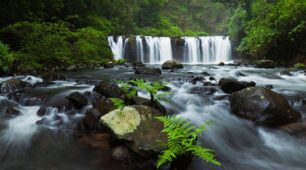
What stays wonderful. The reef still runs. The rainforest is at its most alive, and the waterfalls that draw visitors from around the world are at their fullest — the same rainfall that fills the sky fills Barron Falls, Josephine Falls and Millaa Millaa. The air is warm enough that a downpour is a pleasure rather than a hardship. Accommodation is easier to find and often cheaper. And the region belongs a little more to the people who live here.
Cyclones: The Calm and Accurate Version
The Bureau of Meteorology defines Australia’s tropical cyclone season as running from 1 November to 30 April, and notes that cyclones outside those months are rare. Since 1980 the Australian region has averaged around ten tropical cyclones each season — but that figure covers the whole of northern Australia, not Cairns.
Cairns Regional Council, which runs the local disaster group, puts the local position plainly on its cyclones page: several cyclones form in the north each year, and they may not all cross the coast or affect the Cairns area. Even when a cyclone stays offshore, it can bring strong winds, heavy rain and flash flooding.
What this means for a visitor is simple and undramatic. A cyclone is not something that arrives without notice. The Bureau keeps a 24-hour watch and publishes a seven-day tropical cyclone forecast, so a developing system is usually visible days ahead. If one is forecast during your stay, you will know about it well before it matters, your accommodation will have a plan, and the advice you need will come from the Council, the Bureau and ABC radio — the official emergency broadcaster in Queensland.
- Bureau of Meteorology — tropical cyclone knowledge centre
- Bureau of Meteorology — current warnings and alerts
- Cairns Regional Council — cyclones (Council last updated this page on 18 March 2026)
- Get Ready Queensland — preparing for severe weather
These are live pages. We deliberately do not reproduce current warnings here, because they change by the hour and the responsible authority is always the better source.
Should You Travel in the Wet Season? The Honest Trade-off
The wet season suits you if you want the rainforest and the waterfalls at their most spectacular, you would rather pay less and share less, you are comfortable being flexible about the order you do things in, and you are happy to swim in a stinger suit or a netted enclosure rather than an open beach.
You may prefer May to October if your trip is short and every day has to count, you are set on long unsealed-road drives or multi-day walks, you are travelling with someone for whom heat and humidity are genuinely difficult, or beach swimming without a stinger suit is the point of the holiday.
What most people get wrong. The two seasons are not “good” and “bad”. They are different holidays. The dry season gives you certainty; the wet season gives you drama, colour and space. Choose the one that matches the trip you actually want.
The Question Most People Ask Next
“If it rains, what do I actually do that day?” — More than you would think. Rain barely affects a reef trip, because you spend the day in the water; it makes the waterfalls better rather than worse; and Cairns has a good wet-weather afternoon in it — the Cairns Museum, the Cairns Art Gallery, the Skyrail through cloud-wrapped rainforest, or simply a long lunch while a storm passes. For a fuller list of what is open and bookable today, see Things to Do in Cairns Today. The one thing worth planning around is the road, not the sky: check QLDTraffic before any drive, and never enter floodwater.
Weather figures on this page come from the Bureau of Meteorology and were checked on 3 August 2026. Cyclone and disaster information comes from the Bureau, Cairns Regional Council and Get Ready Queensland, each used only within its own area of responsibility.
Sources and Further Reading
Every climate figure on this page comes from published long-term observations rather than impression. Weather changes, so we link to the live sources rather than asking you to trust a number frozen on a web page.
- Bureau of Meteorology — Cairns Aero climate statistics (station 031011): the long-term monthly temperature and rainfall averages used throughout this page.
- Bureau of Meteorology — Australian tropical cyclone season: the official season dates and season monitoring.
- Bureau of Meteorology — Tropical cyclone warnings: the live warning service during the season.
- Queensland Government — Disasters and emergencies: current warnings, road closures and emergency contacts.
- Surf Life Saving Queensland — Marine Stingers: the marine stinger season and safe swimming guidance.
Climate averages are long-term statistics, not forecasts. Every source above was checked and found current on 31 July 2026. Always check the current Bureau of Meteorology forecast for the days you are travelling.
A Hot Getaways destination. Where Care is Our Compass.
Travel Kindly
At Hot Getaways, care is our compass — and a little kindness makes every journey better. When you visit Cairns, we gently ask you to:
- Protect the reef — wear reef-safe sunscreen and never touch or stand on the coral.
- Respect the wildlife — admire the birds, turtles and rainforest creatures from a distance, and take your rubbish home with you.
- Support local — choosing local operators, cafés and guides helps this beautiful place thrive.
- Honour Country — we travel on the traditional lands and sea Country of Australia’s First Peoples, with gratitude and respect to the Traditional Custodians past and present.
- Be kind to each other — a smile, a little patience and a helping hand make the day lovelier for everyone.
Small acts of care add up to something wonderful. Thank you for travelling kindly.