Mossman Gorge is where ancient rainforest, crystal-clear mountain water and the world’s oldest continuing living culture come together in one extraordinary place. Located within the Daintree National Park, this spectacular section of the Wet Tropics World Heritage Area invites visitors to explore rainforest walking trails, walk beside clear mountain streams, and experience the rich culture of the Kuku Yalanji people. It is one of Tropical North Queensland’s most iconic natural and cultural destinations, offering an experience that stays with visitors long after they leave.
Why Visit Mossman Gorge?
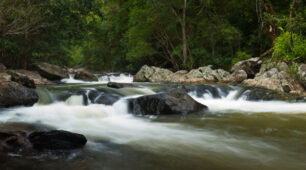
Mossman Gorge is one of the most significant natural and cultural sites in tropical Australia. Carved by the Mossman River through granite boulders in the foothills of the Wet Tropics World Heritage rainforest, the gorge is a place of extraordinary beauty, and it is far more than a pretty swimming hole. This is Kuku Yalanji country, and the Mossman Gorge Centre, owned and operated by the Kuku Yalanji people, is the gateway through which all visitors are invited to enter with respect and awareness.
Ngadiku Dreamtime Walks are conducted by the local Indigenous people and described by Mossman Gorge Cultural Centre as guided journeys through Mossman Gorge and the perfect introduction to the Daintree Rainforest. The Centre also offers the Ngana Mayi Bubu Cultural Experience, a guided walk exploring native plants and bush foods with a Welcome Smoking Ceremony and damper with bush tea. Walking through the ancient rainforest, guides share stories of their connection to this land, stories that span tens of thousands of years and speak of the plants, animals, and spiritual presence that make this landscape what it is. Participants leave with a different understanding of the Daintree and the people who have been its custodians since time immemorial.
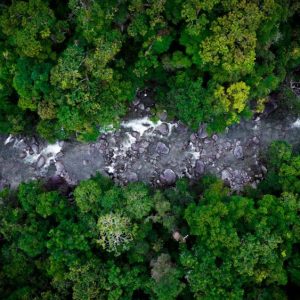
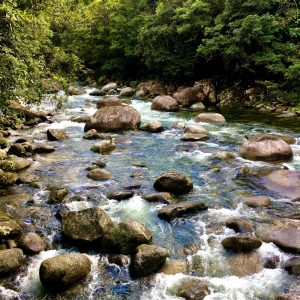
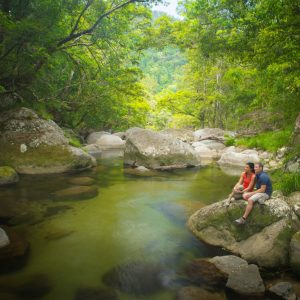
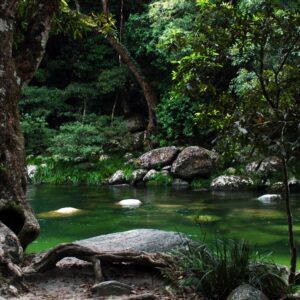
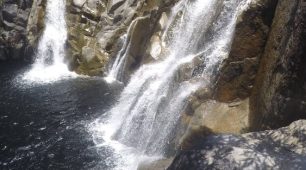
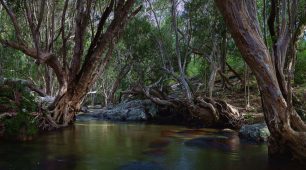
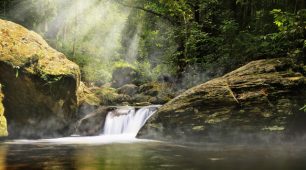
The Mossman River runs over granite boulders in a series of clear natural pools. They look inviting, and it is worth knowing before you arrive that Queensland Parks and Wildlife Service advises visitors not to enter the water here. The walking tracks through the gorge reveal the rainforest in its full, layered complexity: ancient trees, vines, ferns, and the ubiquitous sound of moving water.
Mossman Gorge is located about 75 kilometres north of Cairns, near the town of Mossman, and is a natural complement to a visit to Port Douglas and the Daintree Rainforest.
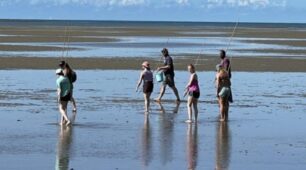 Daintree Dreaming
 Cape Tribulation, Daintree and Mossman Gorge – Multilingual
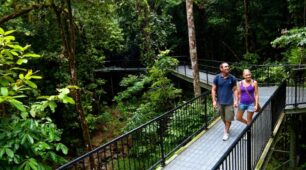 Daintree Rainforest Tour
A Hot Getaways destination. Where Care is Our Compass.
Planning Your Mossman Gorge Visit
Mossman Gorge is one of the most accessible pockets of the ancient Daintree Rainforest, where crystal-clear waters run over granite boulders on Kuku Yalanji country. Here’s what visitors most often ask.
How do I get to Mossman Gorge from Cairns?
Mossman Gorge is about a 75-minute drive north of Cairns, just past Port Douglas. You can self-drive or join a guided day tour. On arrival, a shuttle bus runs from the Mossman Gorge Centre to the walking tracks.
Can you swim at Mossman Gorge?
No. Queensland Parks and Wildlife Service, which manages the park, advises that swimming at Mossman Gorge at any time can be dangerous, that people have died here and others have been seriously injured, and that to stay safe you should not enter the water. Water levels can rise rapidly and without warning, and strong currents, deep water and submerged boulders make the river dangerous to enter. Come for the rainforest walks and the Kuku Yalanji cultural experience instead, and follow the signage and any ranger direction on site.
What is the Dreamtime Walk?
The Ngadiku Dreamtime Walk is a guided experience led by local Kuku Yalanji people, sharing their culture, bush foods and connection to the rainforest. It’s a highlight for many visitors and a respectful way to learn about the world’s oldest living culture.
How long do I need at the gorge?
Allow at least two to three hours for the walking tracks and the visitor centre. Adding the Dreamtime Walk or combining the gorge with Port Douglas or a Daintree tour easily fills a full day.
Are the walking tracks suitable for everyone?
The main lowland rainforest circuit is a gentle, largely boardwalked loop suitable for most fitness levels, though it includes some steps and uneven surfaces. The shuttle makes the tracks easy to reach from the car park.
Frequently Asked Questions
How far is Mossman Gorge from Cairns? It’s about a 75-minute drive north of Cairns, just beyond Port Douglas.
Is there an entry fee? Access to the gorge is free, but there is a small charge for the shuttle bus from the Mossman Gorge Centre to the tracks, and separate pricing for the guided Dreamtime Walk.
Can you swim in the river? No. Queensland Parks and Wildlife Service advises not entering the water at Mossman Gorge at any time, because levels can rise without warning and there are strong currents, deep water and submerged boulders. People have died here. Read the signage on site and follow any ranger direction.
Do I need to book in advance? The gorge itself doesn’t require booking, but the guided Dreamtime Walk is popular and best reserved ahead, especially in peak season.
When is the best time to visit? The dry season (May to October) brings the most comfortable walking weather and the most reliable track conditions, while the wet season makes the rainforest especially lush and the river much higher and faster.
Which walks can you do at Mossman Gorge, and how long are they?
Mossman Gorge Cultural Centre publishes four self-guided walks. Baral Marrjanga is 270 metres, 5 to 10 minutes, graded easy, and runs from the shuttle bus stop to a lookout over the Mossman River. The Lower River Track is 300 metres, 5 to 10 minutes, moderate to easy. Rex Creek Bridge is 460 metres, about 10 minutes, moderate to easy. The Rainforest Circuit Track from Rex Creek Bridge is 2.4 kilometres return, about 45 minutes, moderate to easy.
Is Mossman Gorge accessible for wheelchairs?
Mossman Gorge Cultural Centre states that the Baral Marrjanga track is suitable for wheelchairs, strollers and the vision-impaired. It is 270 metres, graded easy, and includes two sections of elevated boardwalk through the lower rainforest canopy. The Centre also warns that steps on the Lower River Track can be slippery and asks visitors to use the handrails provided.
How far is Mossman Gorge from Cairns and Port Douglas?
Mossman Gorge Cultural Centre states that it is about 20 minutes from Port Douglas and 75 minutes from Cairns, with plenty of onsite parking.
What is at the Mossman Gorge Cultural Centre?
The Centre describes itself as an award-winning ecotourism facility at the entrance to the World Heritage listed Daintree Rainforest, with an art gallery, the Mayi Cafe, self-guided walks, and Indigenous-guided experiences including the Ngadiku Dreamtime Walk and the Ngana Mayi Bubu Cultural Experience.
Travel Kindly
At Hot Getaways, care is our compass — and a little kindness makes every journey better. When you visit Cairns, we gently ask you to:
- Protect the reef — wear reef-safe sunscreen and never touch or stand on the coral.
- Respect the wildlife — admire the birds, turtles and rainforest creatures from a distance, and take your rubbish home with you.
- Support local — choosing local operators, cafés and guides helps this beautiful place thrive.
- Honour Country — we travel on the traditional lands and sea Country of Australia’s First Peoples, with gratitude and respect to the Traditional Custodians past and present.
- Be kind to each other — a smile, a little patience and a helping hand make the day lovelier for everyone.
Small acts of care add up to something wonderful. Thank you for travelling kindly.
Honest Suitability: Is Mossman Gorge Right For You?
We would rather help you choose well than persuade you to go. Here is our honest assessment.
| Visitor | Our honest view | Why |
|---|---|---|
| Visitors with limited mobility | Yes, on one specific track | Queensland Parks and Wildlife Service, the land manager, describes the Baral Marrjanga track as a Grade 1 walking track that is suitable for wheelchairs, strollers and the vision-impaired, and the Mossman Gorge Cultural Centre describes the same 270 metre track as graded easy with two sections of elevated boardwalk. The longer rainforest circuit track is Grade 3 and QPWS states it has no wheelchair-accessible facilities. Verified with QPWS on 3 August 2026. |
| Visitors who want cultural depth as well as scenery | Yes, and this is the standout | The Ngadiku Dreamtime Walks are conducted by the local Indigenous people, and the Ngana Mayi Bubu experience includes a Welcome Smoking Ceremony and bush foods. |
| Families | Yes | The short walks, the shuttle bus and the cafe make this one of the easiest rainforest experiences in the region with children. |
| Visitors who want a long walk | Modest but real | The Rainforest Circuit Track from Rex Creek Bridge is 2.4 kilometres return, about 45 minutes, graded moderate to easy. |
| Visitors wanting to swim | No — choose somewhere else | Queensland Parks and Wildlife Service advises not entering the water at Mossman Gorge at any time. People have died here. Come for the rainforest walks and the Kuku Yalanji cultural experience, and swim elsewhere. |
| Visitors in a hurry | Yes, surprisingly | Baral Marrjanga takes 5 to 10 minutes from the shuttle bus stop and still delivers the view. |
Time-Aware and Season-Aware Planning
- An hour for the shuttle, Baral Marrjanga and the lookout.
- Two hours to add Rex Creek Bridge and the Rainforest Circuit Track.
- Half a day for a guided Dreamtime Walk plus the gallery and the cafe.
- Getting there: the Cultural Centre states it is about 20 minutes from Port Douglas and 75 minutes from Cairns, with plenty of onsite parking.
- Season: Rainfall here is strongly seasonal. Bureau of Meteorology long-term averages for Cairns Aero (station 031011, 83 years of record) are 404.8 mm in January, 437.5 mm in February and 422.1 mm in March, against just 26.5 mm in August, with an annual average of 2,025.5 mm. Source: Bureau of Meteorology climate statistics, Cairns Aero.
Verified Safety Information
Safety comes before everything else on this page. Every point below is drawn from an official source, and we link to those sources so you can check the current position yourself.
- Queensland Parks and Wildlife Service advises visitors not to enter the water at Mossman Gorge. Its guidance for this park states that swimming here at any time can be dangerous, that people have died here and others have been seriously injured, that water conditions are unpredictable and levels can rise rapidly and without warning, and that strong currents, deep water and submerged boulders make the river dangerous to enter. It also advises never jumping or diving into the river. Source: Visiting safely, Daintree National Park, Queensland Parks and Wildlife Service, verified 3 August 2026.
- Take care around cassowaries, which live here. Queensland Parks and Wildlife Service advises slowing down when driving through their habitat, watching for adults and chicks at the roadside, staying well away and never feeding them, because these large birds can cause serious injury or death. Do not touch stinging trees, which grow along rainforest edges and cause a very painful sting from any part of the leaf. Source: Visiting safely, Daintree National Park, Queensland Parks and Wildlife Service, verified 3 August 2026.
- Mossman Gorge Cultural Centre specifically warns that the steps on the Lower River Track can be slippery, and asks visitors to take care and use the handrails provided.
- The Mossman River rises quickly after rain on the range. Queensland Parks and Wildlife Service advises not entering the water here at all.
- Queensland Parks and Wildlife Service, which manages these sites, states the position plainly: rivers, creeks and lakes in Queensland’s parks and forests may contain hidden dangers, are not patrolled by lifesavers, and are not the same as a swimming pool — you enter the water at your own risk. Read and follow the on-site signs, and stay out of the water during and after heavy rain, when creeks can rise quickly and run with strong currents. Source: Water safety, Queensland Parks and Wildlife Service.
- Never dive or jump in. Water depth in a natural pool changes after every flood and submerged rock is not visible from above.
- Queensland Government advice is unambiguous: within the natural range of the estuarine crocodile, which runs from around Gladstone north to the Torres Strait, no waterway can be considered crocodile free. Being Crocwise starts with three steps — keep out of the water, stay more than five metres back from the water’s edge, and keep a sturdy object between yourself and the water. Source: Be Crocwise top tips, Queensland Government.
- Crocodiles are highly mobile, particularly after heavy rain and flooding, and can travel hundreds of kilometres. Queensland Government also states that crocodile interactions can occur at any time of the year, so seasonal reasoning is not a substitute for reading the signage in front of you.
- This is cassowary country. Queensland Government advice is to never approach an adult cassowary, never approach a chick or get between a chick and its father, and never feed a cassowary — feeding is illegal, dangerous, and has resulted in cassowary deaths. Give them space and observe from a distance. Source: Southern cassowary, Queensland Government.
- Check Queensland park alerts and warnings for the Tropical North Queensland region before you leave home, together with current weather and road conditions.
Queensland Parks and Wildlife Service puts it plainly: parks and forests are wild places with hidden dangers for the unwary visitor. Before you leave home, check Queensland park alerts and warnings for the Tropical North Queensland region, along with current weather and road conditions, and pay close attention to warning signs when you arrive.
Every source above was checked and found current on 3 August 2026. Conditions, track access and closures change constantly. Queensland Parks alerts are the current source, and ranger signage on site overrides everything, including this page.
Local Knowledge
The points below are local knowledge and editorial judgement rather than operational facts. They are the things we would tell a friend. Conditions change, so treat them as a starting point and always follow official signage and advice.
- Take the guided walk if you can. The difference between walking through rainforest and having it explained by the people whose Country it is, is the difference between a nice morning and a memorable one.
- Go early. The shuttle and the tracks are quietest in the first hour, and the rainforest is at its most active then too.
- The Mayi Cafe is worth building into your plan rather than treating as an afterthought, and buying there keeps the money in the community that runs the place.
- Look for Manjal Dimbi, Mount Demi, from the lookout 80 metres past Rex Creek Bridge. The Cultural Centre points it out, and it changes how the valley reads.
Helping Look After This Place
This is Kuku Yalanji Country, and the Cultural Centre exists so that visitors can experience it in a way the community has chosen. Following its lead is the whole point.
- Take everything out that you brought in, including fruit peel and tissues, which do not break down as quickly as people expect in the rainforest.
- Stay on the formed tracks. It protects fragile root systems and stops new informal paths forming, and it is also the single simplest way to stay safe.
- Give wildlife room and resist the urge to feed anything. Queensland Government advice is that feeding cassowaries is illegal, dangerous and has resulted in cassowary deaths.
- Support the small local businesses you pass. A coffee in a village bakery or an entry fee at a family-run attraction is what keeps these communities able to look after the places you have come to see.
- Sunscreen, insect repellent and soap wash off skin and into waterways. Because this is a drinking-water catchment and a World Heritage river, keeping products out of the water matters here, and it is one more reason the walking tracks rather than the river are the way to enjoy the gorge.
- The Wet Tropics Management Authority acknowledges Rainforest Aboriginal Peoples as the Traditional Custodians of the Wet Tropics. Where a site has a traditional name or story, using it is a quiet way of recognising a connection that long predates tourism.
Mossman Gorge in the Wet Season
Between November and April this is a different place. The rainfall that defines the wet season is precisely what makes the waterfalls of Far North Queensland worth travelling for — and it is also what makes them worth treating with respect.
What the wet season gives you
Volume, sound and colour. Falls that are elegant in September become genuinely powerful between January and April, the rainforest around them is at its most saturated green, and the light after a storm is something photographers plan whole trips around. It is also the quietest time of year at the popular sites.
What Queensland Parks and Wildlife asks you to understand
QPWS is direct about this, and it is worth reading before you go rather than at the car park:
- Rivers, creeks, lakes and beaches in Queensland’s national parks and forests are not patrolled by lifesavers. You enter the water at your own risk.
- During and after heavy rain, creek conditions can change and become dangerous, with fast-flowing, rapidly rising water and strong currents. QPWS advice in those conditions is simply not to enter the water.
- Never dive or jump into any waterway — the water may be shallow, or there may be submerged objects.
- Use the established tracks to reach the water, and take care on wet, slippery rocks.
- Always read and follow the on-site signs. They are specific to that site and are there for a reason.
Full guidance is on the QPWS water safety page, and current closures and conditions are published as park alerts — which is the page to check the morning you go, rather than relying on anything written in advance.
Crocodiles move with the water
The Queensland Government’s Be Crocwise guidance notes that crocodiles are highly mobile, especially after heavy rain and floods, can travel hundreds of kilometres, and are found in all types of waterways. It states that no waterway within their natural range can be considered crocodile free. Keep out of the water, stay more than five metres from the water’s edge, and keep a sturdy object between yourself and the water where you can. See Be Crocwise top tips.
Mossman Gorge and the Mossman River
The Mossman River drains a steep catchment in the Daintree ranges and rises quickly. Access to Mossman Gorge is via the Mossman Gorge Centre shuttle, and both the Centre and Queensland Parks and Wildlife publish conditions and closures — the river is closed to swimming when levels are unsafe, and that decision belongs to them rather than to visitors. North of the Daintree River, road access is also affected in the wet; Douglas Shire Council publishes current status for the routes beyond the ferry.
Wet season or dry season? The honest trade-off
The wet season suits you if you have come to see the falls at their most powerful, you are happy to look rather than swim, and you can check conditions on the morning and change plans if they have changed.
The dry season suits you if swimming is the point. From about May the water drops, clears and slows, tracks are reliably open, and the swimming holes of the region are at their most inviting — gentler, but far more usable.
The question people ask next
“How do I know if it is safe on the day?” — Check park alerts before you leave, check QLDTraffic for the road, and then read the signs at the site itself. If the water is brown, fast or higher than it was, that is the answer, and no view is worth arguing with it.
Safety guidance on this page is from Queensland Parks and Wildlife and the Queensland Government Be Crocwise programme, each within its own area of responsibility, checked 3 August 2026. In any emergency, dial 000.
Where To Go Next
If this one is not quite right for your day, these are the closest alternatives.
- Mossman Gorge Tours — Guided options including transport from Cairns and Port Douglas.
- Daintree Rainforest — The wider World Heritage area this gorge belongs to.
- Cape Tribulation — Further north, beyond the Daintree River.
- Finlayvale — A quieter local swimming spot nearby.
- All Waterfalls Near Cairns — Compare every waterfall in the region on one page, including which ones are officially listed as accessible.
- Swimming Holes Near Cairns — If a swim matters more than the drop.
- Rainforest and Waterfalls — The wider decision hub, including guided options and rainforest walks.
- Atherton Tablelands — Towns, produce, crater lakes and the cooler country above Cairns.
- The Waterfall Circuit Drive — The classic Tablelands waterfall drive, turn by turn.
- Plan Your Accessible Trip to Cairns — Which Daintree and rainforest sites QPWS names as wheelchair accessible, alongside transport and reef access.