Cassowary Falls is one of those rare places that feels like a secret hidden within the rainforest. Surrounded by ancient tropical forest and named after the remarkable Southern Cassowary, this peaceful waterfall offers a chance to slow down and reconnect with nature. The sound of cascading water, the cool rainforest air and the feeling of being far from everyday life make every visit something special. Whether you’re exploring the Daintree or seeking a quieter corner of Far North Queensland, Cassowary Falls rewards those who venture a little further
Why Visit Cassowary Falls?
Cassowary Falls is a waterfall on a private rainforest and grazing property at Upper Daintree, in the Douglas Shire north of Cairns, on the southern side of the Daintree River — you do not cross the Daintree ferry to reach it — a less-visited gem on the region’s waterfall circuit that rewards the visitors who make the effort to find it. The falls cascade through a deeply forested gorge of dense tropical vegetation, with the sound of water audible long before the falls come into view. It is a place of genuine natural beauty and the kind of quiet that is increasingly rare. The falls are named for the southern cassowary, one of the world’s largest and most ancient birds, found only in the rainforests of Far North Queensland and Papua New Guinea. The cassowary is critically important to the rainforest ecosystem: it is the only animal large enough to swallow and disperse the seeds of many rainforest trees, making it a keystone species whose survival is intimately linked to the health of the forest around Cassowary Falls and throughout the Wet Tropics.
Getting to Cassowary Falls
Cassowary Falls is on private property and there is no independent public access. The property owner states plainly that access is on guided tour only and that there is no self-drive. There is no public car park and no public walking track to the falls; the tour crosses private farmland by vehicle from the property gate, and transfers run from Daintree Village. If you want to see Cassowary Falls you must book with the operator. Please do not attempt to find your own way in — this is a working private property, not a public reserve. Sources: Gateway Cassowary Falls, the property owner and Douglas Shire Council, Daintreepedia, 14 January 2026, both checked 6 September 2026. The trail passes through genuine World Heritage rainforest, with the birdlife and vegetation being rewarding throughout rather than simply at the destination. Allow sufficient time for the return walk and bring water, insect repellent and sun protection. The falls are most spectacular during and immediately after the wet season, when water flow is at its highest. Check current track conditions before visiting as wet season rains can make tracks slippery and difficult.
Visiting Responsibly
The rainforest around Cassowary Falls is important cassowary habitat. If you are fortunate enough to encounter a cassowary on your visit, maintain a respectful distance, cassowaries are large and powerful birds that deserve space. Do not feed them under any circumstances. The regeneration of rainforest habitat for cassowary recovery is one of the most important conservation priorities in Far North Queensland, and every visitor who treats the forest with care makes a small contribution to that effort.
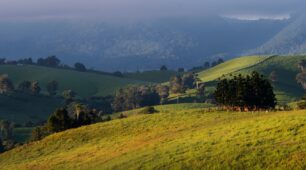 Atherton Tablelands Tours
 Things to Do in Cairns with Kids
 Adventure and Adrenaline
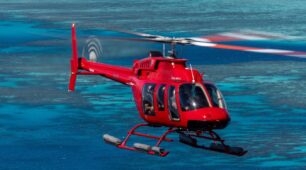 Scenic Flights & Helicopter Tours
Finding Cassowary Falls
Cassowary Falls sits within World Heritage-listed wilderness on the Atherton Tablelands. The access road is unsealed and requires care in wet conditions, a standard 2WD vehicle is fine in dry weather, but a 4WD is recommended in the wet season. Wear solid footwear and carry plenty of water, the tropical sun is deceptively intense even under canopy cover. The falls are at their most dramatic during or after heavy rain, when the cascades roar with extraordinary force.
Wildlife Along the Way
The rainforest track to Cassowary Falls is one of the best wildlife corridors in the region. The cassowary, the large, dangerous, brilliantly coloured ratite bird for which the falls are named, is a genuine resident of this area, and sightings are not uncommon if you move quietly and keep your eyes on the forest floor and lower canopy. Musky rat-kangaroos, Boyd’s forest dragons, and remarkable birdlife including kingfishers, riflebirds and the striking spotted catbird are all possible companions on the walk. Visiting at dawn or dusk dramatically increases the chance of memorable wildlife encounters. A Hot Getaways destination. Where Care is Our Compass.
Travel Kindly
At Hot Getaways, care is our compass — and a little kindness makes every journey better. When you visit Cairns, we gently ask you to:
- Protect the reef — wear reef-safe sunscreen and never touch or stand on the coral.
- Respect the wildlife — admire the birds, turtles and rainforest creatures from a distance, and take your rubbish home with you.
- Support local — choosing local operators, cafés and guides helps this beautiful place thrive.
- Honour Country — we travel on the traditional lands and sea Country of Australia’s First Peoples, with gratitude and respect to the Traditional Custodians past and present.
- Be kind to each other — a smile, a little patience and a helping hand make the day lovelier for everyone.
Small acts of care add up to something wonderful. Thank you for travelling kindly.
Honest Suitability: Is Cassowary Falls Right For You?
We would rather help you choose well than persuade you to go. Here is our honest assessment.
| Visitor | Our honest view | Why |
|---|---|---|
| Visitors who like quiet places | Yes | This is one of the lesser-visited falls in the region. |
| Visitors wanting certainty | Consider a signposted national park site | We have been able to verify very little official information about this site, and we would rather tell you that than fill the gap. |
| Visitors with limited mobility | Not published | This site is not a Queensland Parks and Wildlife Service park, so no land manager accessibility statement exists for us to pass on, and we will not estimate one. Checked 3 August 2026. |
| First-time visitors with one day | Choose the circuit falls | If this is your only waterfall day, the verified, signposted sites will serve you better. |
Time-Aware and Season-Aware Planning
- Allow more time than you expect. Lesser-known sites take longer to find and reach.
- Season: Rainfall here is strongly seasonal. Bureau of Meteorology long-term averages for Cairns Aero (station 031011, 83 years of record) are 404.8 mm in January, 437.5 mm in February and 422.1 mm in March, against just 26.5 mm in August, with an annual average of 2,025.5 mm. Source: Bureau of Meteorology climate statistics, Cairns Aero.
Verified Safety Information
Safety comes before everything else on this page. Every point below is drawn from an official source, and we link to those sources so you can check the current position yourself.
- Because we have not been able to verify official track information for this site, treat the signage you find on the ground as the only reliable guide, and do not improvise a route.
- If access appears to cross private land, it probably does. Turn around rather than assume.
- Queensland Parks and Wildlife Service, which manages these sites, states the position plainly: rivers, creeks and lakes in Queensland’s parks and forests may contain hidden dangers, are not patrolled by lifesavers, and are not the same as a swimming pool — you enter the water at your own risk. Read and follow the on-site signs, never dive or jump into any waterway because the water may be shallow or hold submerged objects, and stay out of the water during and after heavy rain, when creeks can rise quickly and run with strong currents. Source: Water safety, Queensland Parks and Wildlife Service.
- Never dive or jump in. Water depth in a natural pool changes after every flood and submerged rock is not visible from above.
- Queensland Government advice is unambiguous: within the natural range of the estuarine crocodile, which runs from around Gladstone north to the Torres Strait, no waterway can be considered crocodile free. Being Crocwise starts with three steps — keep out of the water, stay more than five metres back from the water’s edge, and keep a sturdy object between yourself and the water. Source: Be Crocwise top tips, Queensland Government.
- Crocodiles are highly mobile, particularly after heavy rain and flooding, and can travel hundreds of kilometres. Queensland Government also states that crocodile interactions can occur at any time of the year, so seasonal reasoning is not a substitute for reading the signage in front of you.
- This is cassowary country. Queensland Government advice is to never approach an adult cassowary, never approach a chick or get between a chick and its father, and never feed a cassowary — feeding is illegal, dangerous, and has resulted in cassowary deaths. Give them space and observe from a distance. Source: Southern cassowary, Queensland Government.
- Check Queensland park alerts and warnings for the Tropical North Queensland region before you leave home, together with current weather and road conditions.
Queensland Parks and Wildlife Service puts it plainly: parks and forests are wild places with hidden dangers for the unwary visitor. Before you leave home, check Queensland park alerts and warnings for the Tropical North Queensland region, along with current weather and road conditions, and pay close attention to warning signs when you arrive.
Every source above was checked and found current on 3 August 2026. Conditions, track access and closures change constantly. Queensland Parks alerts are the current source, and ranger signage on site overrides everything, including this page.
Local Knowledge
The points below are local knowledge and editorial judgement rather than operational facts. They are the things we would tell a friend. Conditions change, so treat them as a starting point and always follow official signage and advice.
- Falls like this are the reward for people who have already done the famous ones. If it is your first day in the region, it is not the place to start.
- Cassowaries genuinely do live in this part of the world, and the name is not decoration. Drive slowly.
Helping Look After This Place
Part of the pleasure of a place like this is knowing it will still be here, just as beautiful, for the people who come after you. A few small choices make a real difference.
- Take everything out that you brought in, including fruit peel and tissues, which do not break down as quickly as people expect in the rainforest.
- Stay on the formed tracks. It protects fragile root systems and stops new informal paths forming, and it is also the single simplest way to stay safe.
- Give wildlife room and resist the urge to feed anything. Queensland Government advice is that feeding cassowaries is illegal, dangerous and has resulted in cassowary deaths.
- Support the small local businesses you pass. A coffee in a village bakery or an entry fee at a family-run attraction is what keeps these communities able to look after the places you have come to see.
- Sunscreen, insect repellent and soap all end up in the water when you swim. Rinsing off before you get in, and swimming without them where you can, is a small kindness to a small creek.
- The Wet Tropics Management Authority acknowledges Rainforest Aboriginal Peoples as the Traditional Custodians of the Wet Tropics. Where a site has a traditional name or story, using it is a quiet way of recognising a connection that long predates tourism.
Common Questions About Cassowary Falls
What do you know about Cassowary Falls?
More than we did. Cassowary Falls is on a private 160-acre rainforest and grazing property at Upper Daintree, and the owner states that access is by guided tour only, with no self-drive. Douglas Shire Council lists it as a tour operator and accommodation business rather than a public site, and Queensland Parks and Wildlife Service does not list it at all. What we still cannot tell you is anything about accessibility: no land manager publishes an accessibility statement for a private property, and we will not estimate one.
Should I visit Cassowary Falls on a short trip?
Probably not. If you have one waterfall day in the region, the signposted and officially described sites, including the three falls on the Waterfall Circuit, will give you a more reliable day.
Are there really cassowaries here?
Southern cassowaries live throughout the Wet Tropics. Queensland Government advice is to never approach an adult or a chick, never feed one, and to slow down rather than stop when driving in cassowary habitat.
Where To Go Next
If this one is not quite right for your day, these are the closest alternatives.
- Millaa Millaa Falls — A verified, signposted alternative.
- Barron Falls (Din Din) — The closest major falls to Cairns, with an accessible lookout track.
- All Waterfalls Near Cairns — Compare every waterfall in the region on one page, including which ones are officially listed as accessible.
- Swimming Holes Near Cairns — If a swim matters more than the drop.
- Rainforest and Waterfalls — The wider decision hub, including guided options and rainforest walks.
- Atherton Tablelands — Towns, produce, crater lakes and the cooler country above Cairns.
- The Waterfall Circuit Drive — The classic Tablelands waterfall drive, turn by turn.